
Compare
ID kit vs display stand
Two jobs, two kits. Identification happens at the table: jeweler loupe plus a Mohs hardness kit. Display happens on the shelf: a mineral stand plus specimen boxes. Color is the last check, not the first. Purple is not a species.
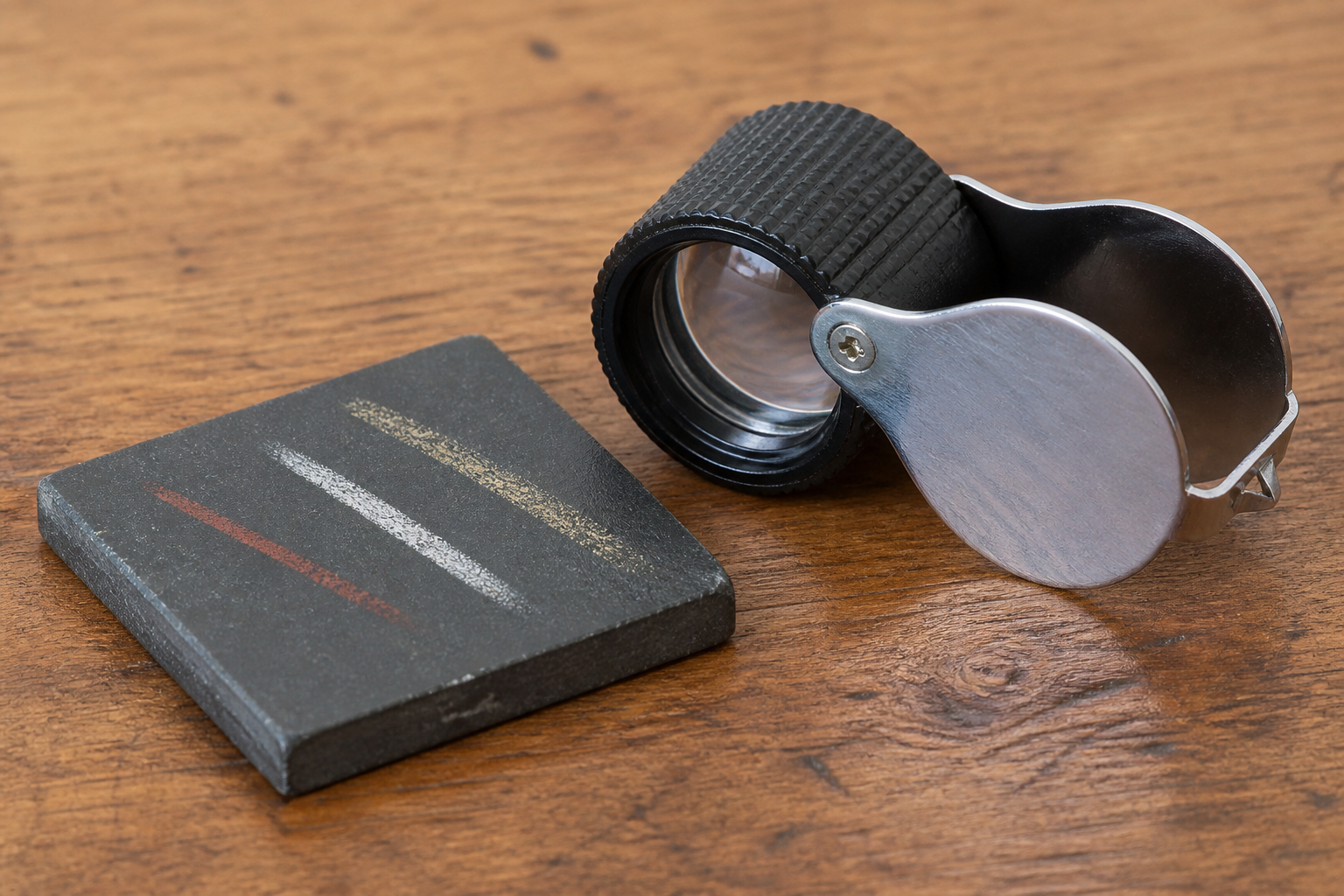
When the ID kit belongs
The Handbook of Mineralogy quartz PDF describes hexagonal prismatic crystals terminated by pyramidal faces. The fluorite PDF and Webmineral list the cube form on an isometric species. A loupe is how you confirm faces, striations, and whether a "point" is actually a cube corner.
Webmineral lists quartz hardness as 7 and fluorite hardness as 4. That three-step gap is the useful check: quartz scratches fluorite; fluorite does not scratch quartz. GIA states that yellow quartz is rare in nature and that most citrine is heated amethyst. A golden cluster at hardness 7 is still SiO2. USGS describes obsidian as volcanic glass that cooled too fast to crystallize, with conchoidal fracture. A Mohs number is the wrong first move on glass.
A 10x loupe if the specimen is still unnamed. Get this. A Mohs kit if you mean to run quartz 7 against fluorite 4. Get this.
When the display stand belongs
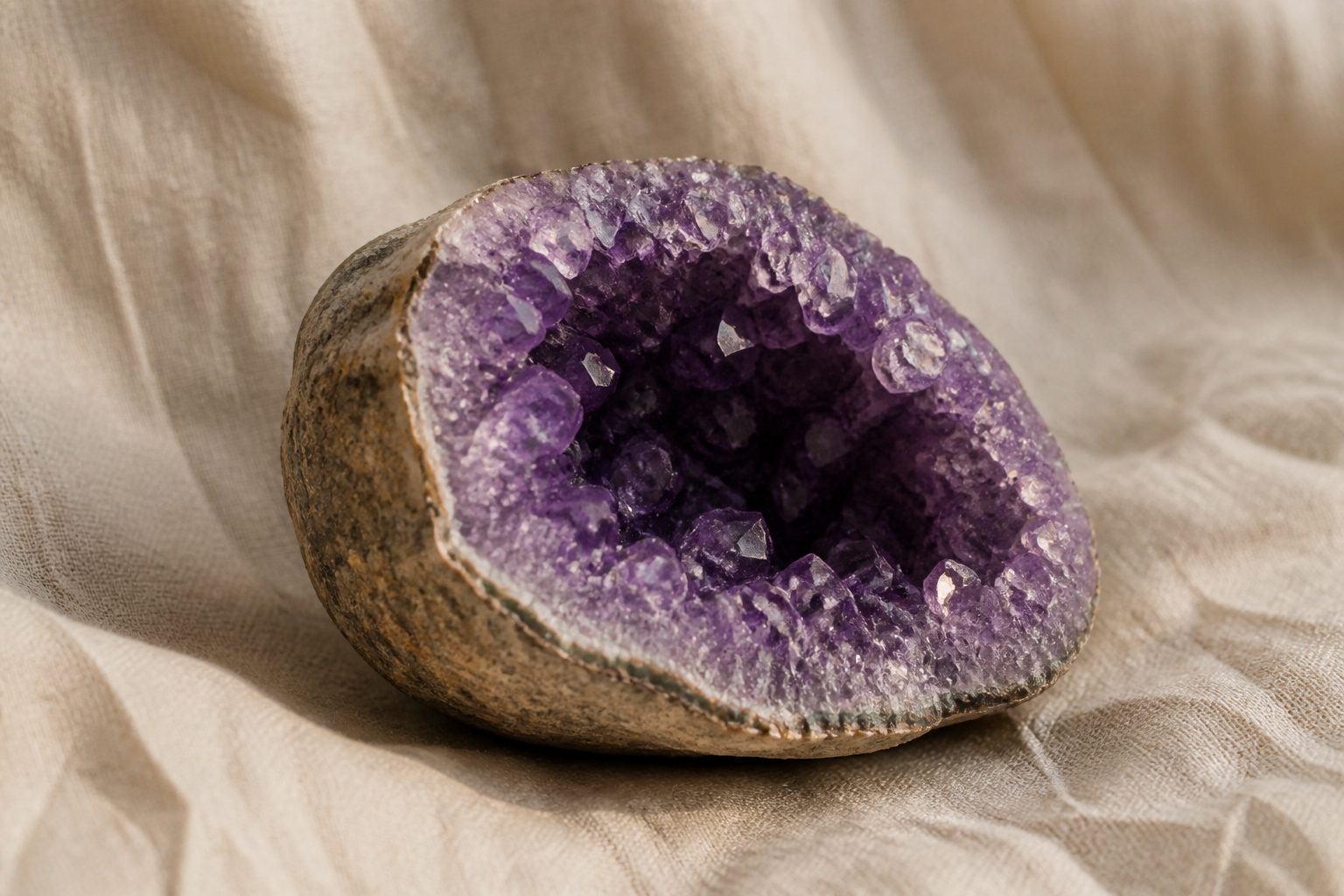
Fluorite is Mohs 4. Once the cube is named, keep it on a stand so it is not rattling in a drawer with quartz points. Clusters and points are a use, not an ID sitting. Labeled specimen boxes keep pieces from chipping each other. That is collector practice, not a USGS finding, and not inventory on this site.
Worked split: a six-sided purple prism at hardness 7 is amethyst, a quartz variety. A purple cube at hardness 4 with cleavage is fluorite. That split is an ID-kit job. Once the cube is fluorite, it is a display-kit job. A named quartz point you already mean to show does not need a hardness run today. A stand holds the prism. The loupe can still come out later for inclusions.
A display stand if the species is already named. Get this. A specimen box if the job is storage, not naming. Get this.
The longer table lives on ID kit vs display stand. Kits sit on Kits. Habit, hardness, color last is the order on Identify a mineral.