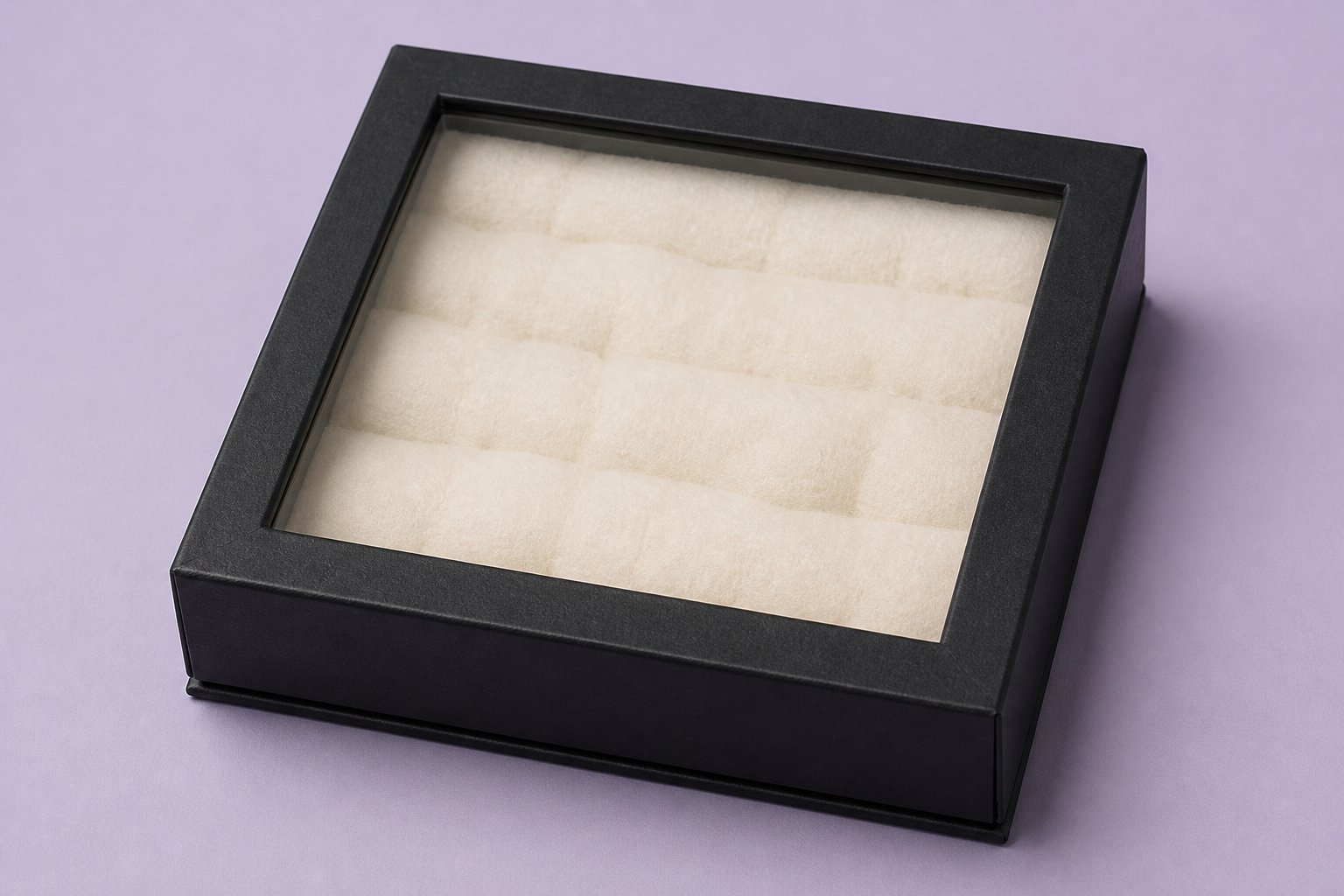
Start with quartz. Mohs 7 is a scratch you can actually run at a table. Open a card for habit and streak. A loupe and a Mohs kit name a specimen. A stand and a box only hold one. ID kit vs display stand if you are still mixing those jobs.
Mineral kinds
Quartz SiO2
Mohs 7HexagonalSpecies
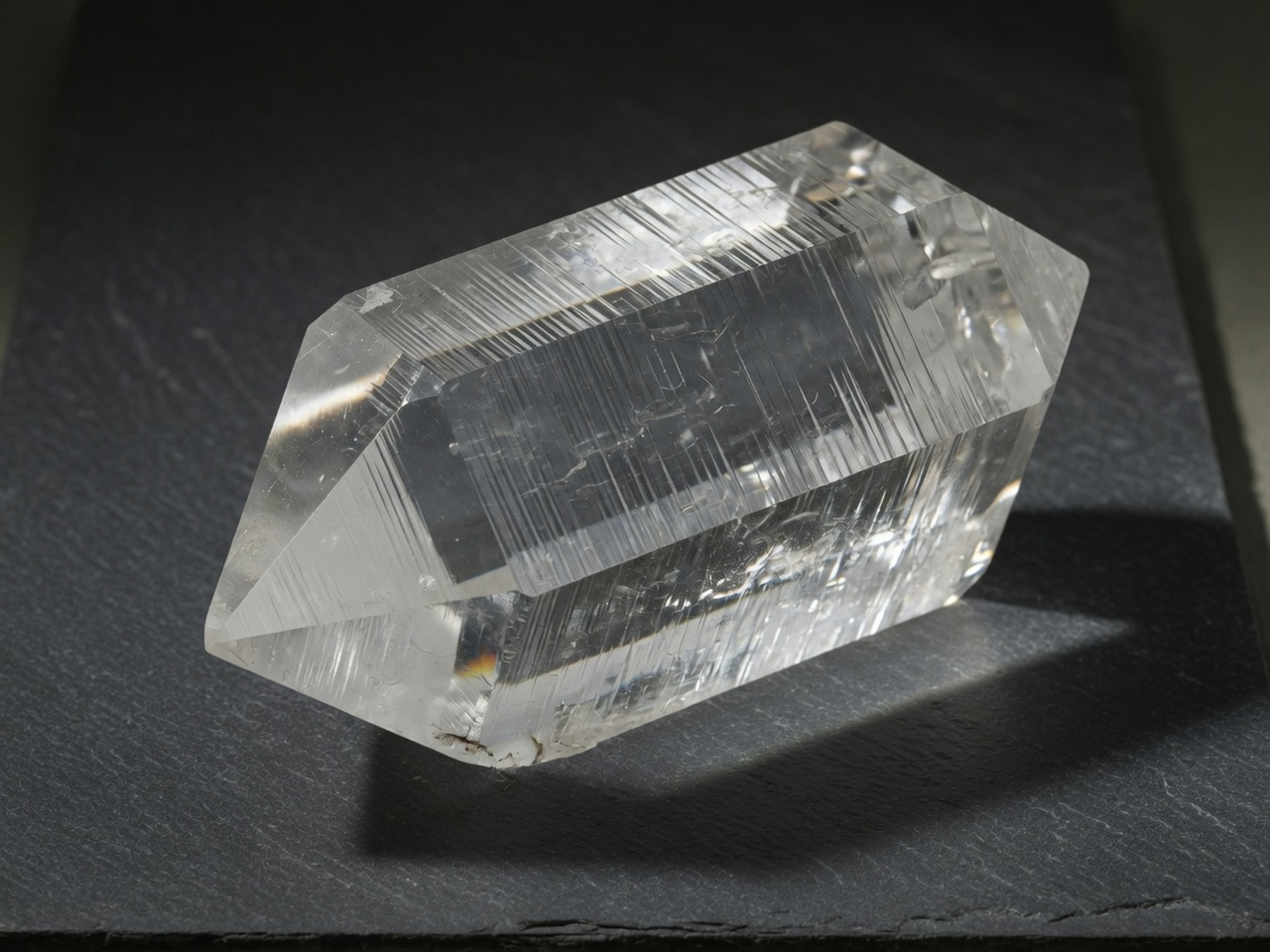
Silicon dioxide. Clear to milky. The Handbook of Mineralogy species PDF records hexagonal prismatic crystals, conchoidal fracture, and Mohs hardness 7. Webmineral files amethyst, citrine, and rose quartz as varieties of this species, not as separate minerals. The common baseline many other cards sit on.
People collect points, compare hardness, wear cut stones, and display clusters.
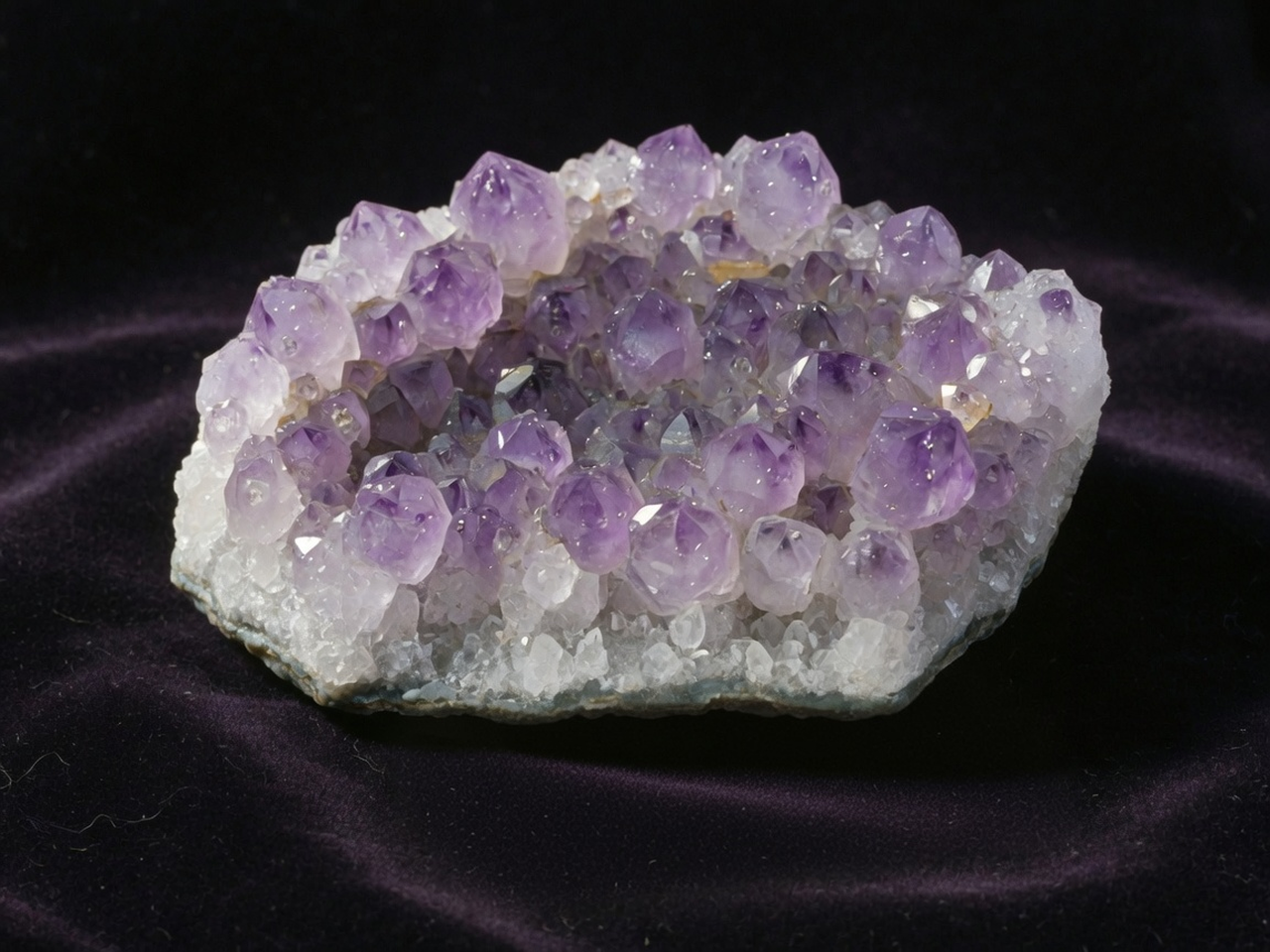
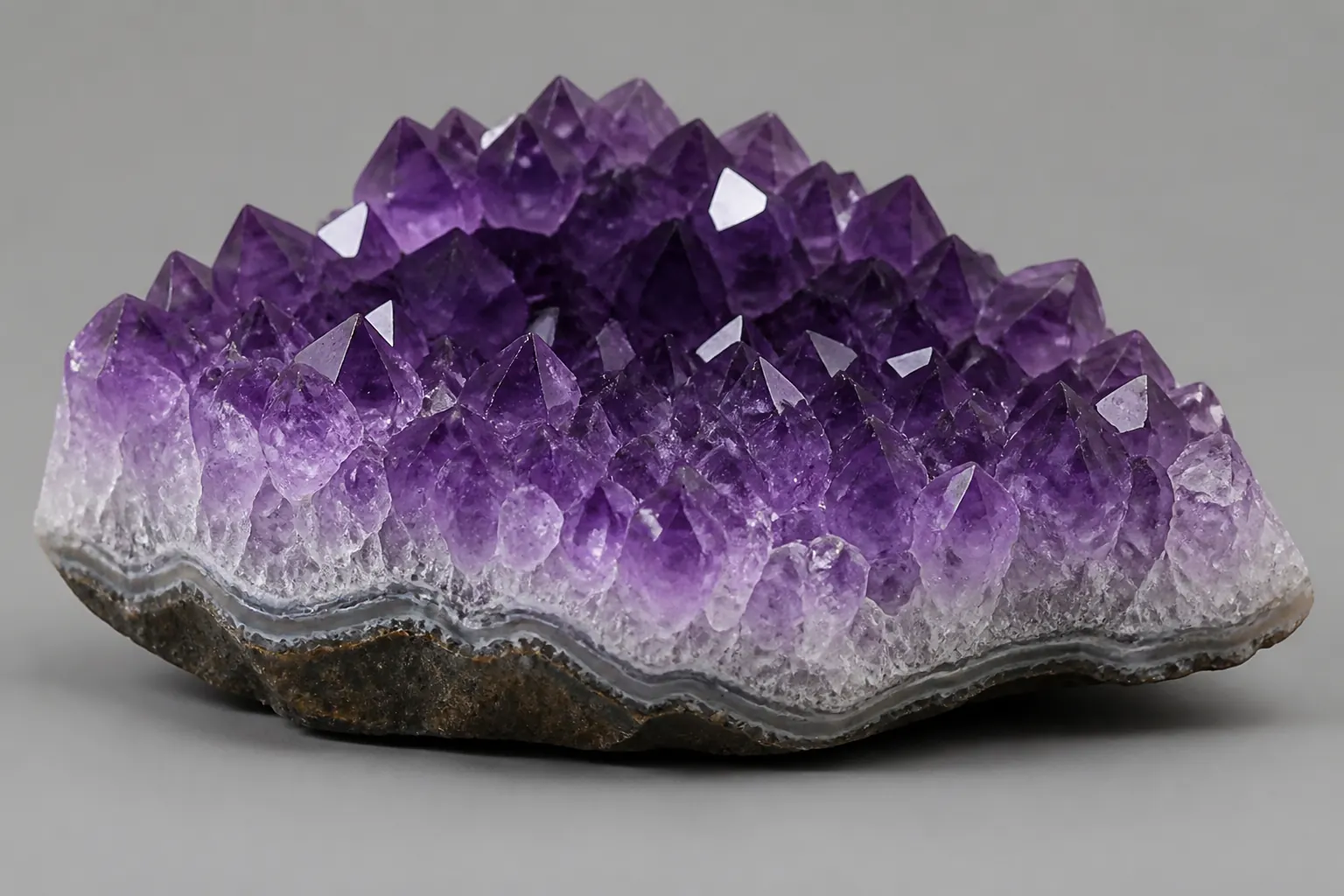
Purple quartz. Color from iron and natural irradiation. Webmineral lists it as a variety of quartz, not a separate species. People display clusters and wear beads. Jewelry and collecting are uses. This hub does not treat a personal meaning as a mineral fact.
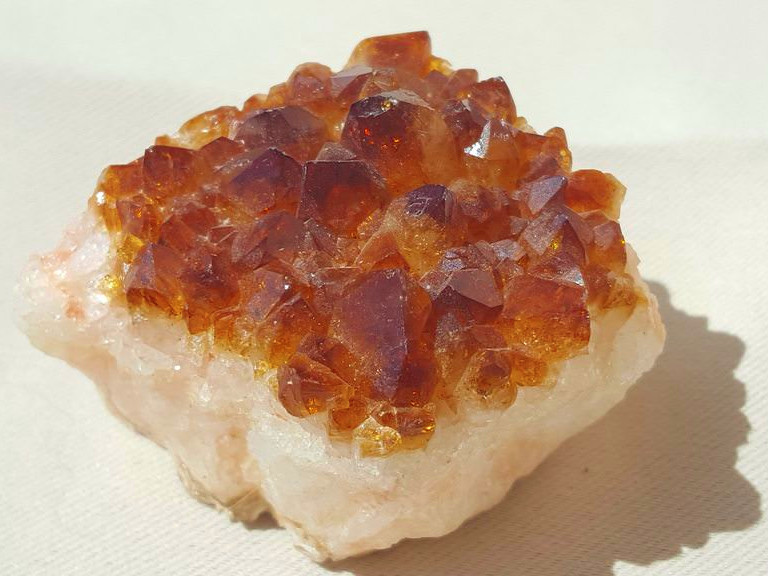
Yellow to amber quartz. Same hexagonal prism habit and Mohs 7 as the host species. Webmineral files citrine as a variety of quartz, not a separate IMA species. GIA states that yellow quartz is rare in nature and that most citrine on the market is heated amethyst. That is a treatment fact on SiO2, not a new mineral. People collect points and wear cut stones. Kind page: Citrine.
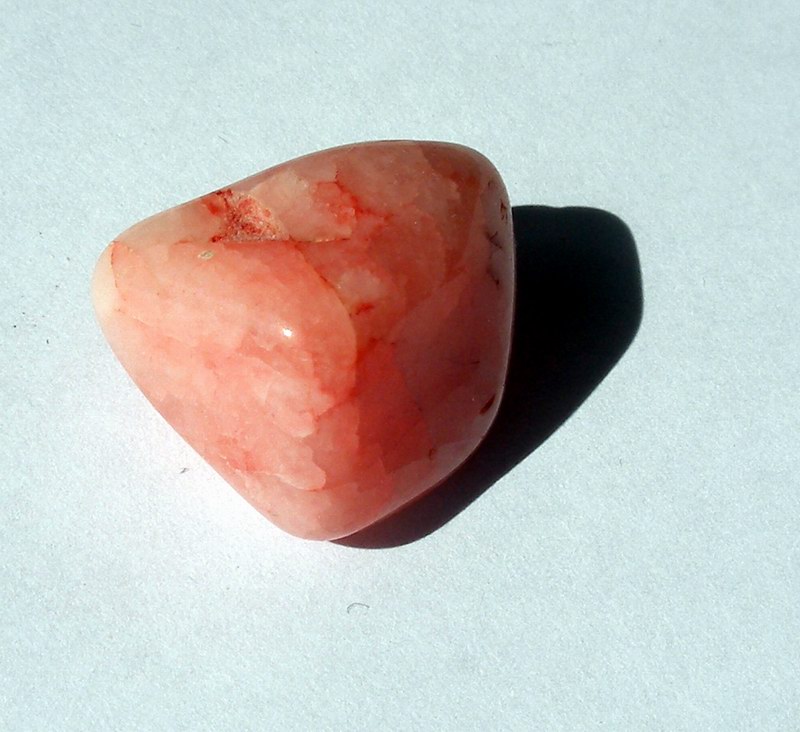
Pink quartz. Most pieces are massive and cloudy, without the sharp prismatic points of colorless quartz. Same formula and Mohs 7. Webmineral lists rose quartz as rose-colored quartz, a variety of the species. People tumble it, carve it, display it, and wear it. Kind page: Rose quartz.
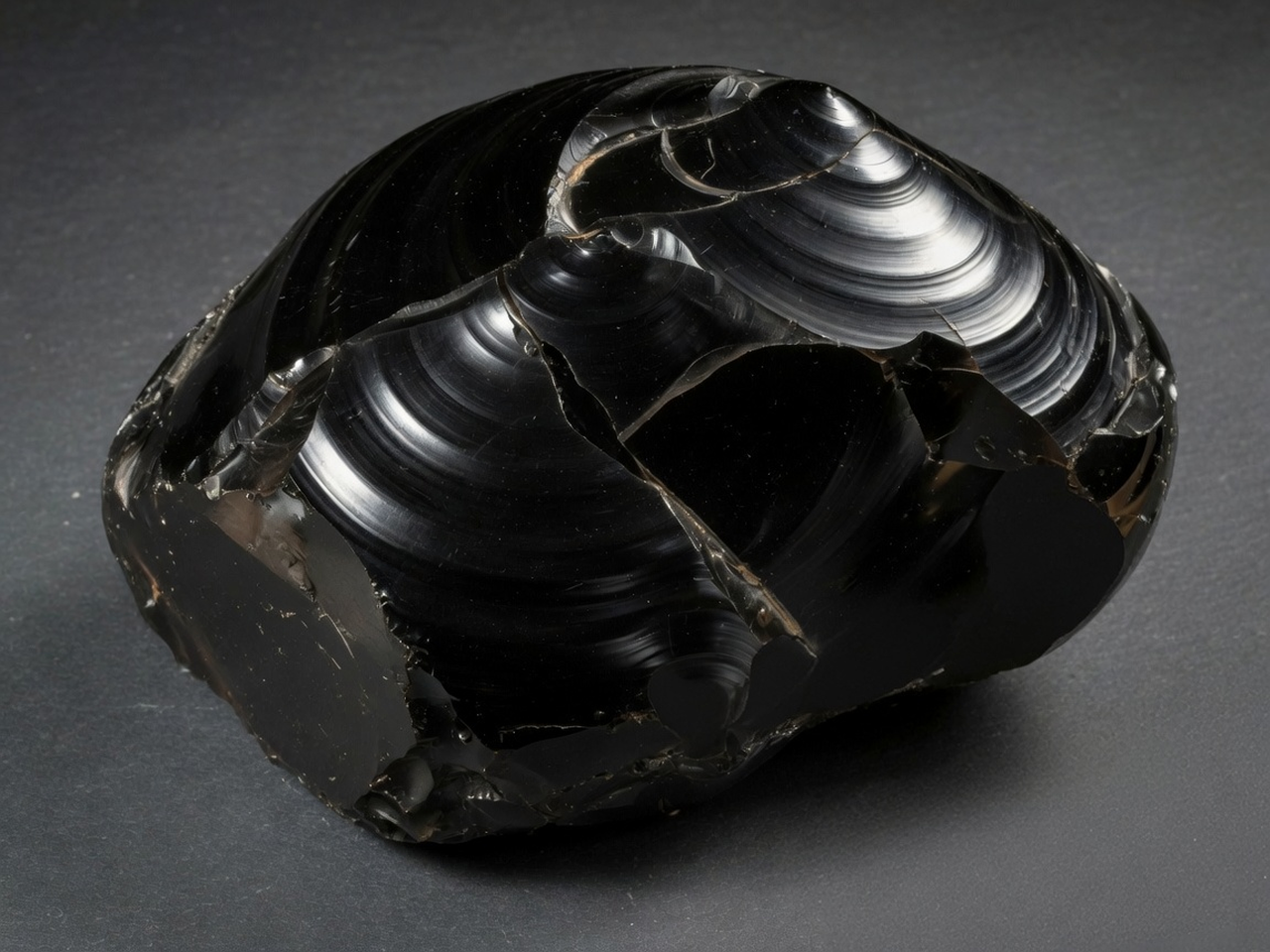
Natural volcanic glass. USGS describes obsidian as lava that cooled too fast to crystallize. We file it with the stones people group as crystals and cite the volcano pages. Fracture is conchoidal.
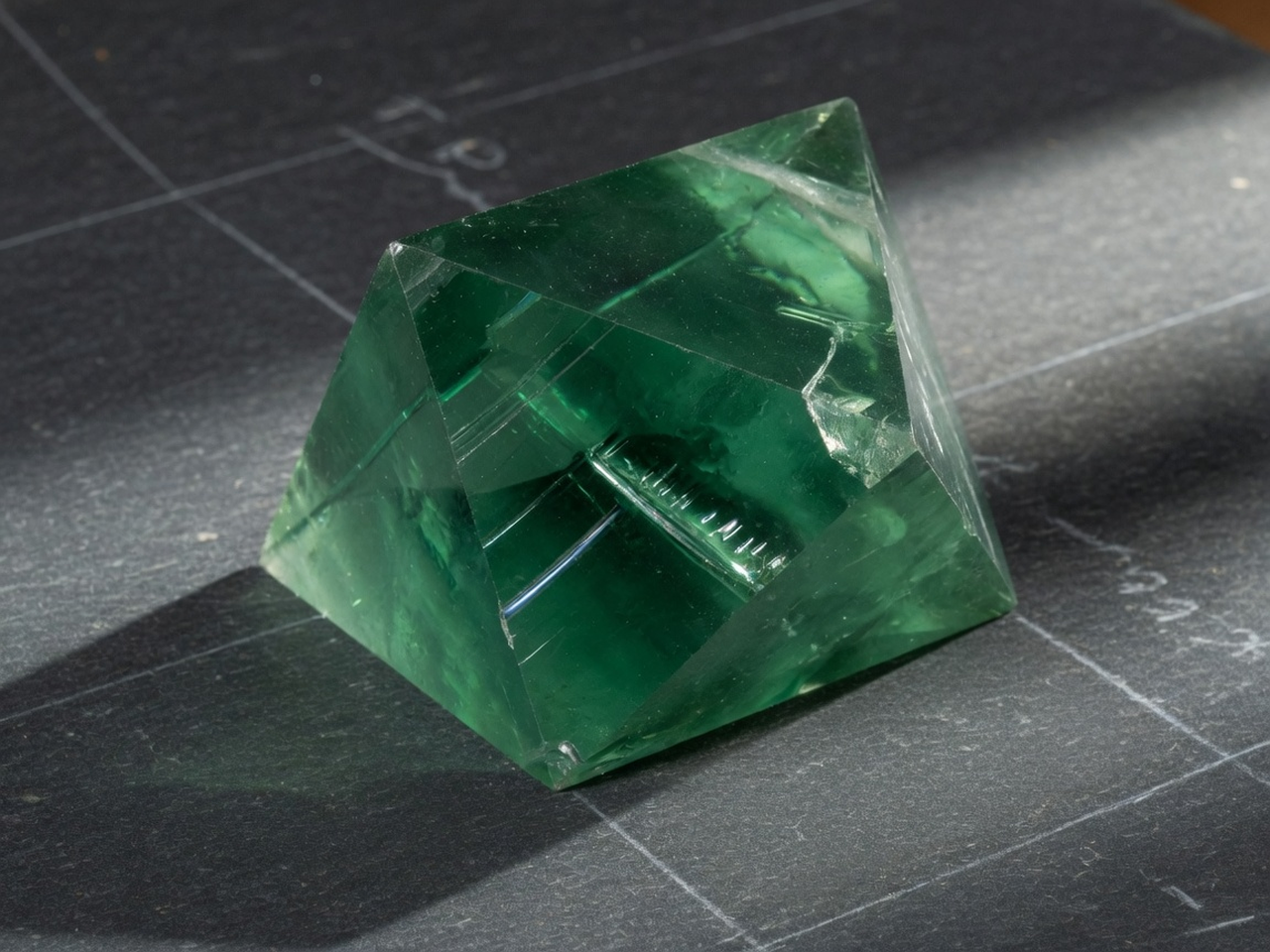
Calcium fluoride. Cubes and octahedra. Many colors. Soft (Mohs 4), a display mineral more than a pocket stone. People collect it for the geometry. USGS fluorspar pages cover the commodity.
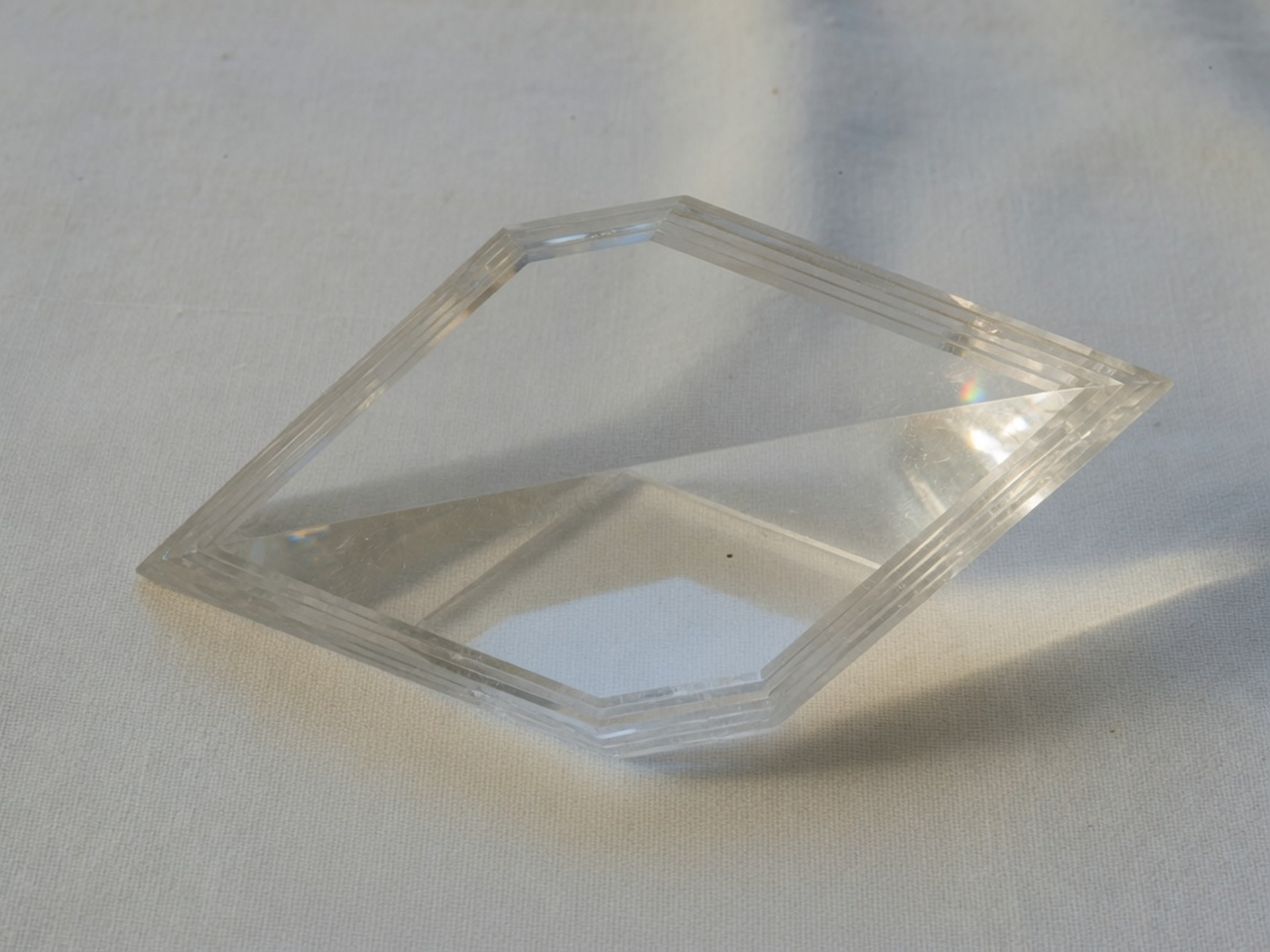
Calcium carbonate. Rhombohedral cleavage in three directions. Transparent optical calcite (Iceland spar) is birefringent. Soft, a knife marks it. Identification, collecting, and display are uses. Kind notes stay with the species pages.
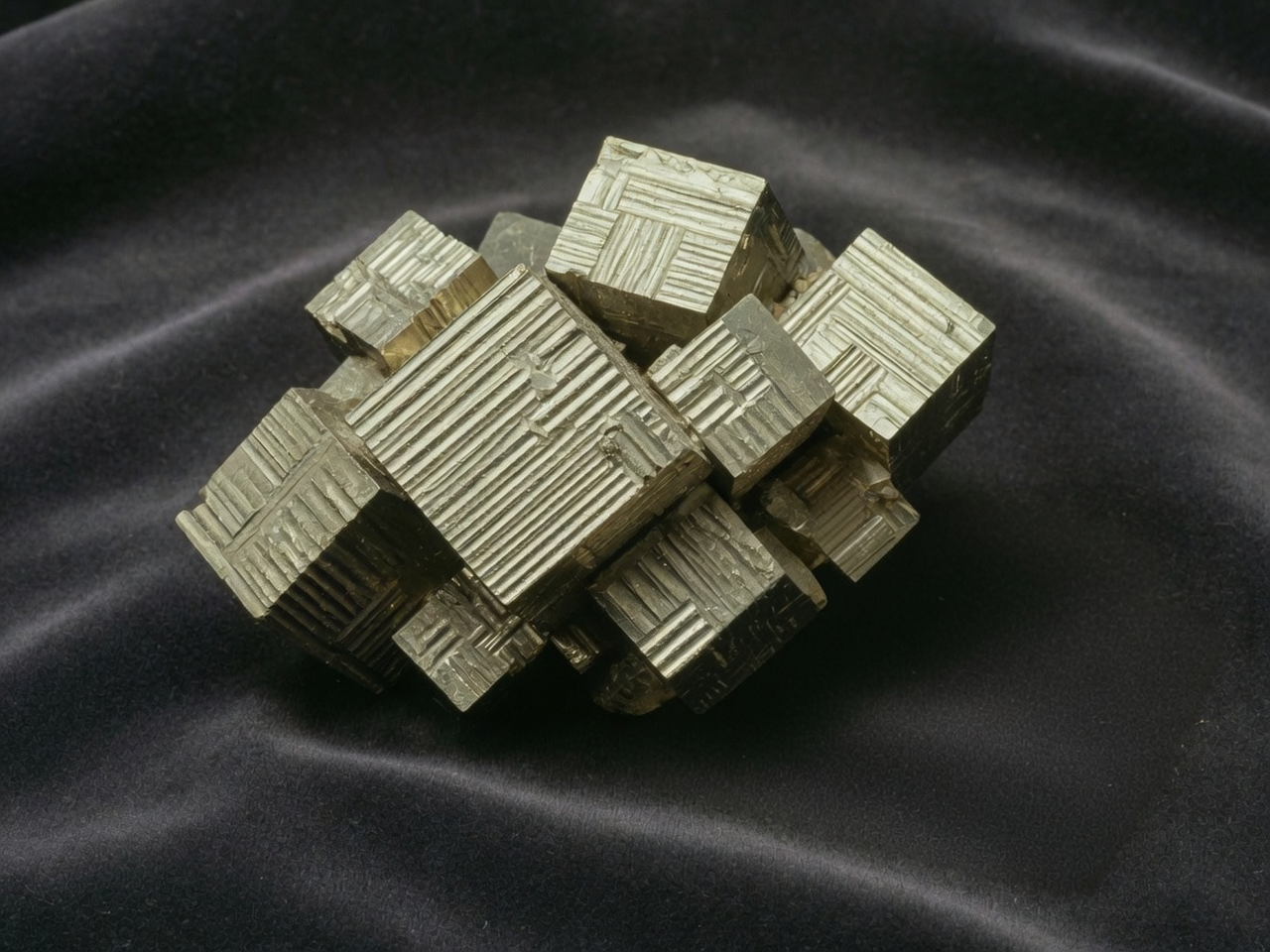
Iron sulfide. Intergrown cubes, often with striated faces. Brassy metallic luster; isometric system. Collectors keep it for the geometry. Identification, not inventory, not a nickname treated as a mineral fact.
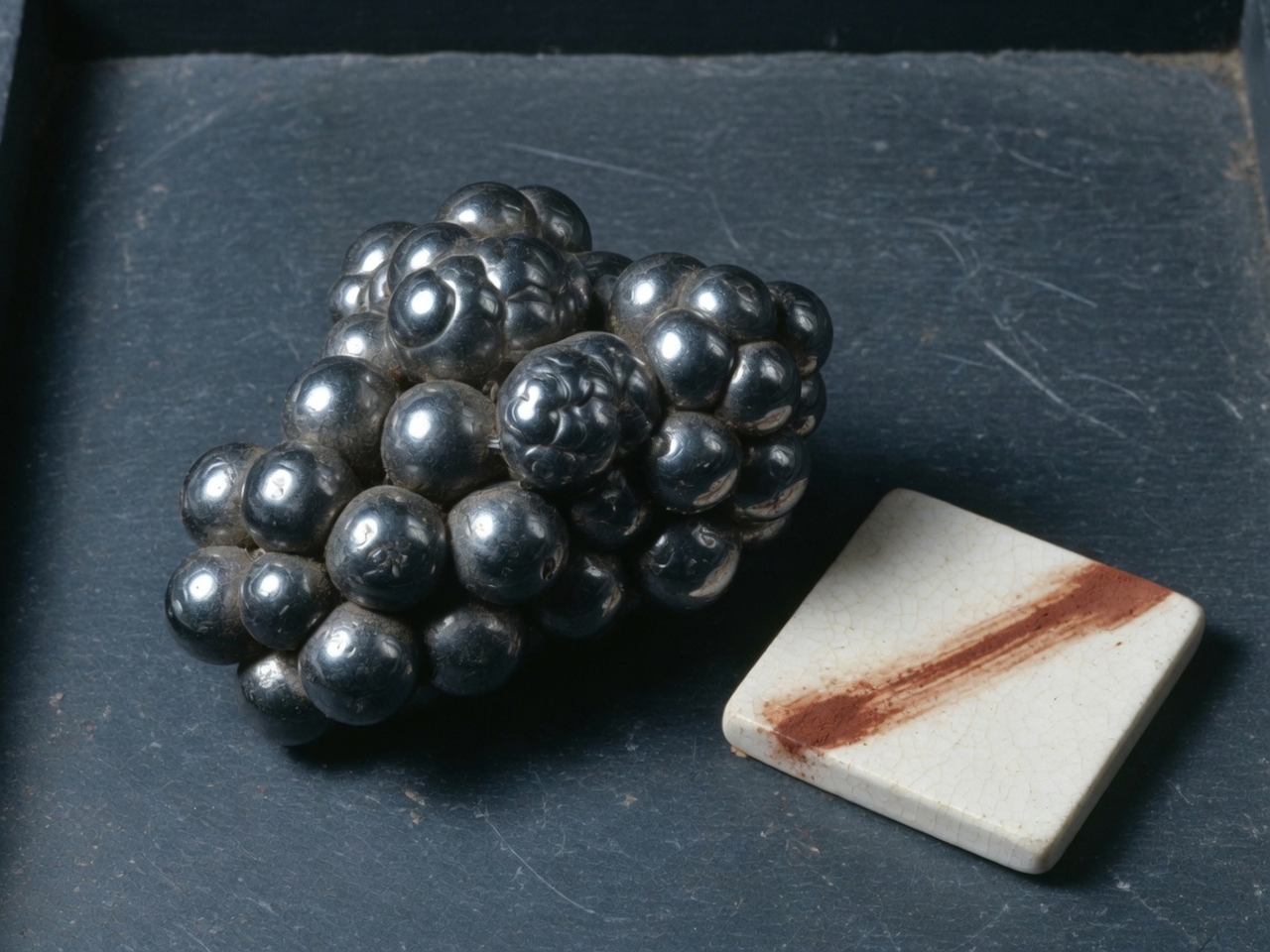
Iron oxide. Kidney-ore / botryoidal habit; steel-grey metallic luster. Streak is deep red-brown regardless of specimen color, that is the diagnostic check. Collecting and display are uses.
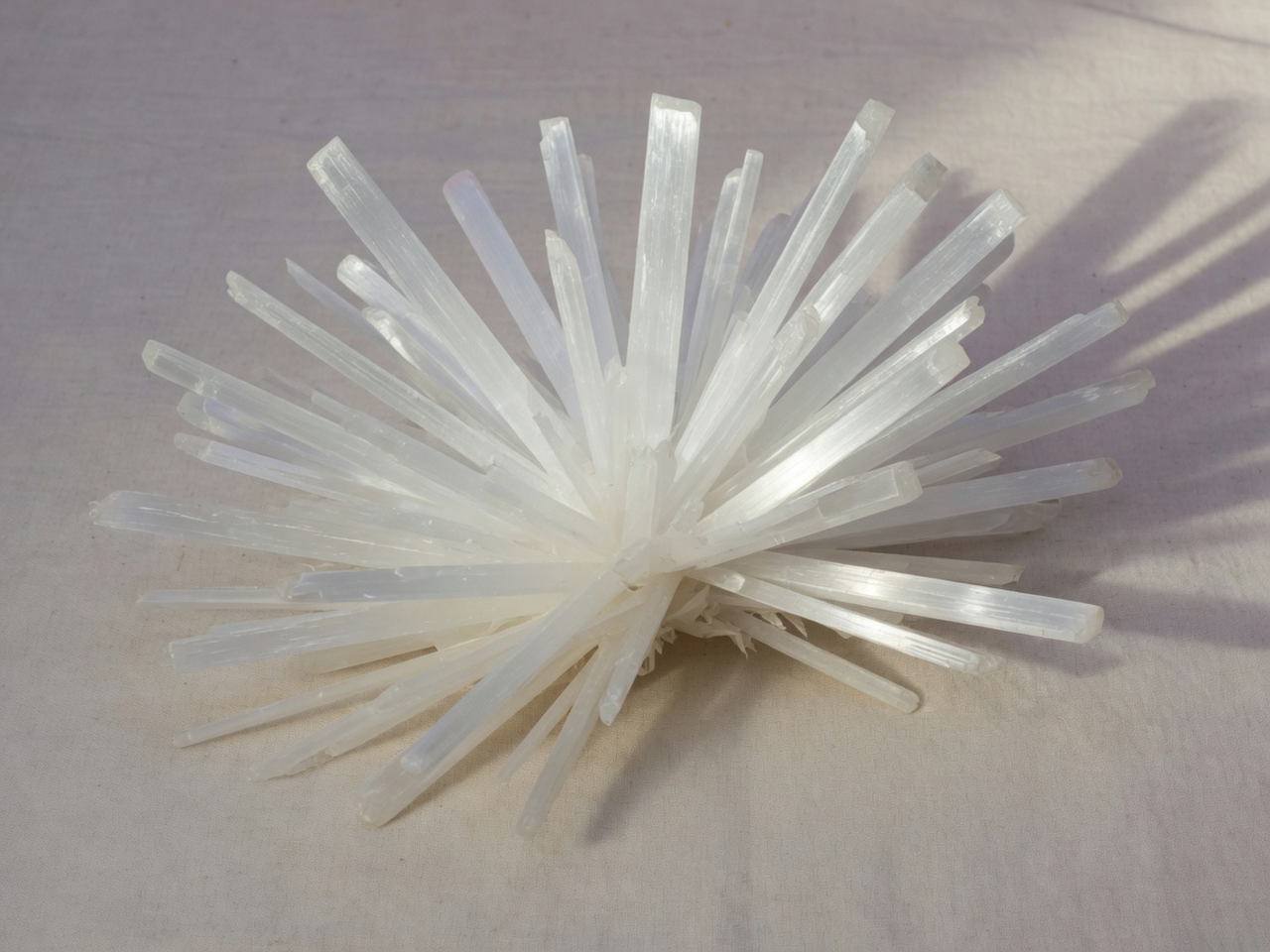
Gypsum variety: CaSO4·2H2O. Radiating blades; pearly to vitreous luster; perfect {010} cleavage. Mohs 2, a fingernail marks it. Coarsely crystalline transparent gypsum is called selenite. Display mineral. Mohs 2, a fingernail marks it.
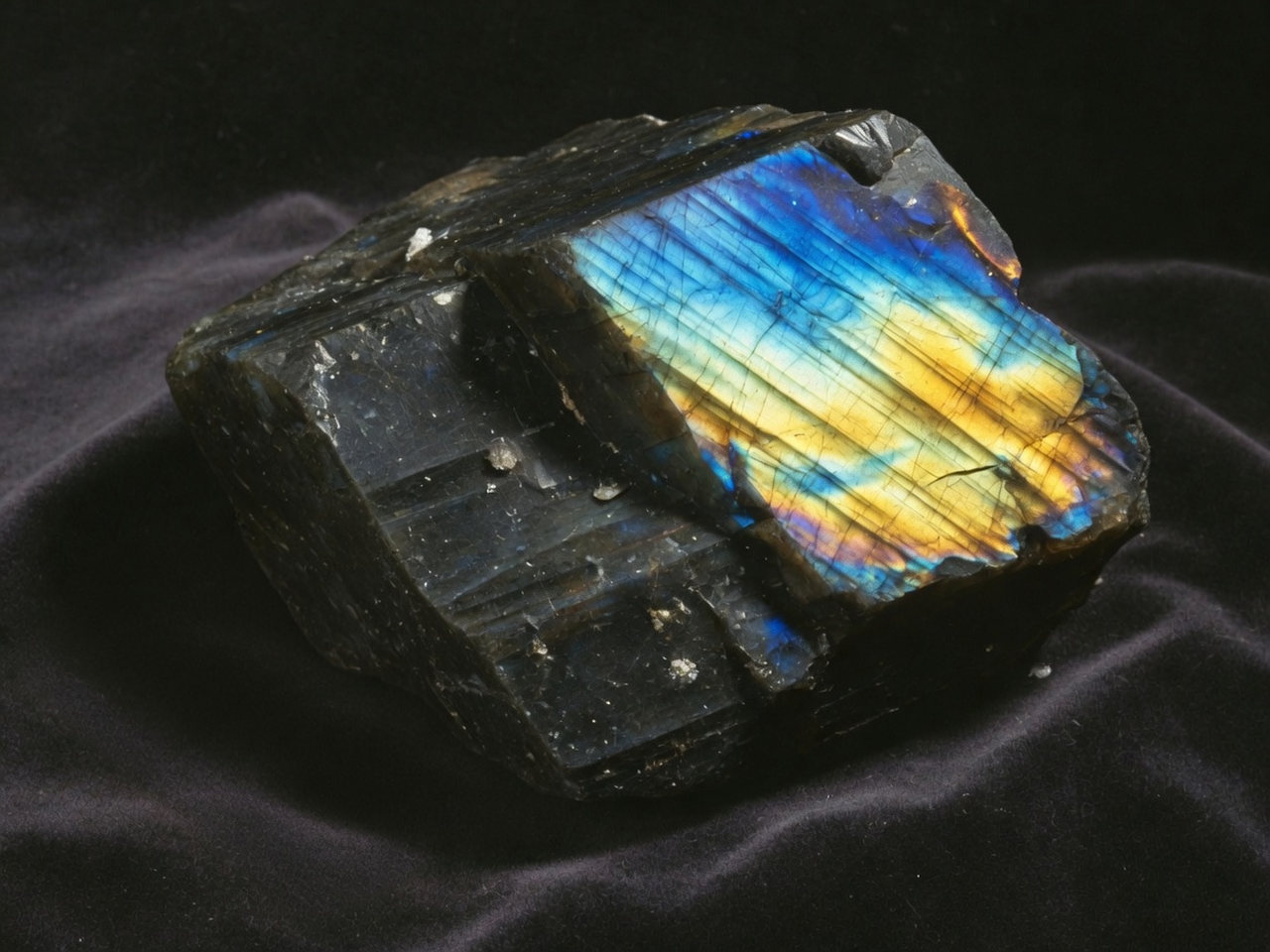
Plagioclase feldspar. Cleavage fragment with vitreous to pearly luster; blue-gold labradorescence (schiller) from internal twinning lamellae. Two cleavage directions intersecting near 86°. People cut it for jewelry and display. Optical effect is a mineral fact, not an aura claim.
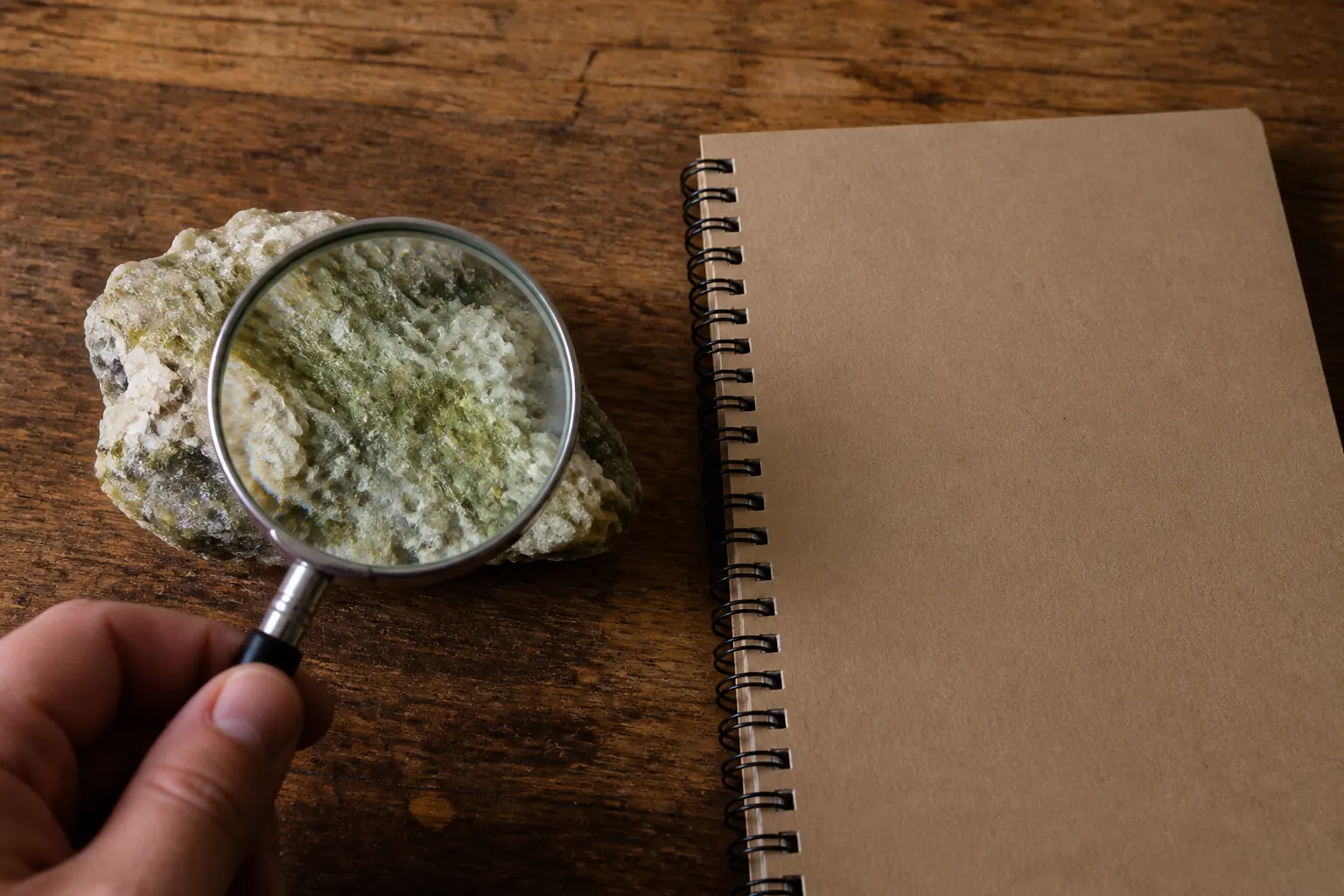
A jeweler loupe is the usual first look at inclusions, facet junctions, and surface wear. Identification gear for inclusions, facet junctions, and surface wear.
A Mohs hardness kit (picks or reference minerals) is how collectors compare quartz (7) to fluorite (4). Identification tool for the quartz 7 vs fluorite 4 split.

 Nothing in this filter. Clear search or choose All.